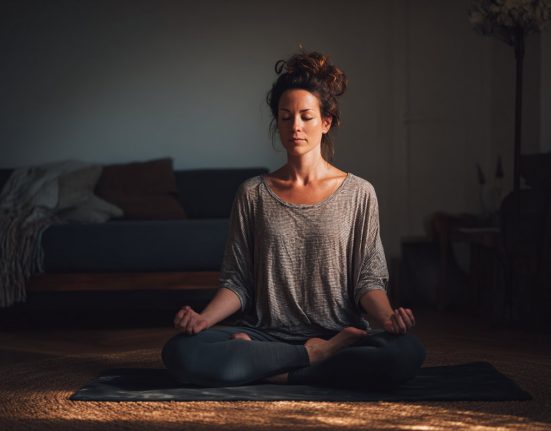

New research is making the case that just a couple of minutes of meditation can have a meaningful impact on our well-being, and the support is in our brainwaves.
In a study published in the journal Mindfulness, scientists tracked how quickly people’s brainwaves changed to reflect more relaxed or meditative states during meditation using electroencephalography (EEG) data, which measures electrical activity in your brain.
The study included roughly 100 participants ranging from people with no meditation experience, “novice” meditators with some experience and advanced meditators with a lot of practice.
The people in the study belonged to the Isha Yoga tradition, a mind-body practice with origins in India, and were practicing a simple breath-watching meditation taught in the school.
Researchers found that—regardless of how experienced someone was—the brains of people in meditation showed “significant” changes emerging around 2 to 3 minutes of meditation, and they peaked between 7 and 10 minutes.
In an article for Psychology Today, one of the study authors, Balachundhar Subramaniam, M.D., M.P.H., said that advanced meditators showed significant changes from the first 30 seconds, suggesting that a longer-term practice or commitment to meditation “changes how your brain rests.”
What Is ‘Breath Watching?’
Breath watching, or mindful breathing, has been long used in Buddhist and Yogic traditions, but practice of it in the Western wellness world has become more common in recent years.
To get started practicing breath watching, participants in the control group of the study were given these instructions:
“Pay attention to the natural movement of your breath. Whenever your mind wanders, simply notice it and gently bring your attention back to your breath.”
The Indian Yogi Sadhguru of the Isha tradition has a seven-minute “Miracle of Mind” meditation encompassing the practice.
“What makes this practice distinct from a mindfulness practice is the rigor and depth of the tradition it comes from,” Dr. Subramaniam said in Psychology Today.
How To Start Meditating at Home
When it comes to weighing the risks and benefits of trying something new in the health and wellness space, it’s safe to say there’s probably few lower-risk choices than starting a meditation or mindfulness practice—even if it’s just for a couple of minutes per day, or a couple days a week.
For many, practicing mindfulness is a good segue into a full-blown meditation practice. The U.S. Centers for Disease Control and Prevention defines mindfulness as the practice of being aware, living in the present and acknowledging what’s going on inside and around you.
To practice mindfulness, set aside a few minutes each day to tune in with yourself. Try focusing on your breath or a sensation you can feel on your body. One key to allowing mindfulness to work its magic is to not be hard on yourself if your mind starts to wander—let past, current and future worries come in to pass without judgement, “like clouds in the sky,” the CDC says.
In the year 2026, we have many digital tools at our disposal to help nudge us (and our brainwaves) in the right direction. For those who want to start meditation but don’t know how, a guided meditation through an app is one good way to get started. Many apps also have different meditation leaders or themes, so you can experiment until you find your groove.