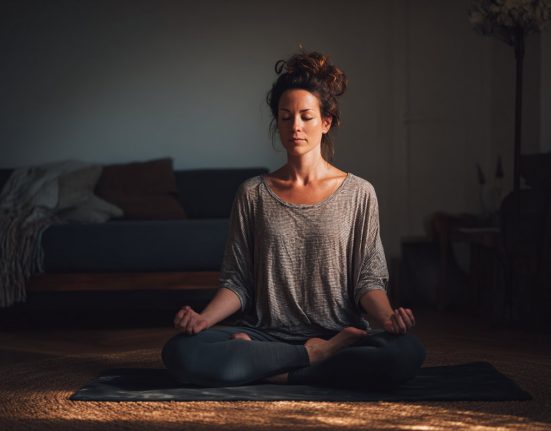


If you have high blood pressure, you’ve likely been told to follow a balanced diet, exercise regularly, and take your medications as prescribed. New evidence also suggests that adding meditation to your routine may help lower blood pressure by activating the parasympathetic nervous system and relaxing blood vessels.
Most studies agree that a minimum of 10 to 15 minutes of meditation a day can help lower blood pressure. But if that number already seems too high for you, starting with just a few minutes a day and gradually increasing your duration over time can still offer meaningful cardiovascular benefits.
Why Meditation Helps Lower Blood Pressure
During stressful situations, your sympathetic nervous system triggers the fight-or-flight response. This causes your blood vessels to narrow, forcing your heart to pump blood faster through smaller vessels. As a result, your blood pressure, heart rate, and breathing all increase.
Meditation, or the act of staying present by focusing on your breath, helps counter the fight-or-flight response. Deep breathing induces a relaxation response, which signals to your body that you are safe. This allows your parasympathetic nervous system—the part of your brain that helps your body return to rest—to widen your blood vessels and decrease the pressure of the blood pumping through your arteries.
In the moment, meditating helps calm your mind and body. But over time, regular practice has a cumulative effect on lowering cortisol levels, improving sleep quality, and reducing resting heart rate—all of which can help you feel calmer and protect your blood pressure from spiking during future stressful situations.
Consistency Matters More Than Duration
The research on exactly how much time you should be meditating every day remains mixed and ongoing. But the general consensus so far is that a minimum of 10 to 15 minutes a day can reduce blood pressure over time. While there’s no maximum limit, more intensive meditation and mindfulness programs tend to stop at the 60-minute mark.
One recent study also suggests that 30 minutes per day may be the sweet spot for lowering blood pressure. But experts say that being consistent with meditation is much more beneficial than longer, but occasional meditation sessions.
“Consistency matters a lot because meditation is not usually something you do once and then your body suddenly knows how to regulate,” said Berenice Marsh, MA, LMFT, a licensed psychotherapist based in California. “The body learns through repetition.”
Starting a long meditation practice right away can seem overwhelming. That’s why starting slow is a better strategy. “A lot of people hear meditation and think they’re supposed to sit still for 30 minutes, clear their minds, and suddenly become calm,” Marsh said. “Most people are not going to start there.”
How to Start a Meditation Practice
When you first start meditating, it’s okay to take baby steps. Marsh explained that dropping your shoulders, unclenching your jaw, and taking one breath at a time, even before opening up an email or after a stressful conversation, can make a big difference over time.
“The goal is to give your body repeated chances to slow down, notice what is happening around you, and focus on breathing,” Marsh said.
There are several meditation techniques you can try, ranging from mindfulness and transcendental meditation to repeating mantras. But it’s important to create a practice that fits your individual needs.
“Meditation does not have to mean sitting perfectly still with an empty mind,” Marsh noted. “It can be walking and noticing your feet on the ground, breathing with your eyes open, listening to a guided meditation, or noticing the chair underneath you and what that feels like.”