

On the subway, everyone looks tired.
Heads bent over screens, fingers scrolling, jaws slightly clenched. A woman in a grey coat taps through three apps in less than ten seconds, as if one of them might finally calm her racing thoughts. A teenager in a hoodie watches TikTok with the sound off, eyes glassy, notifications piling up like tiny alarms.
Someone’s leg bounces. Someone else checks the same email twice. Nobody is breathing very deeply.
Then you spot one man just watching the world slide past the window. No headphones. No phone. Hands resting on his knees. His face isn’t ecstatic or “zen”; he just looks… here. Present. You can almost feel your own shoulders drop a millimetre.
You wonder, for a second, what it would be like to live inside that kind of quiet.
Why mindfulness meditation speaks to our anxious, overcaffeinated brains
Anxiety today doesn’t always look dramatic. It looks like waking up and checking your phone before you even register the daylight. It looks like trying to work with 15 tabs open, jumping between Slack messages, news alerts and half-written emails, then wondering why your brain feels like a browser stuck on “loading.”
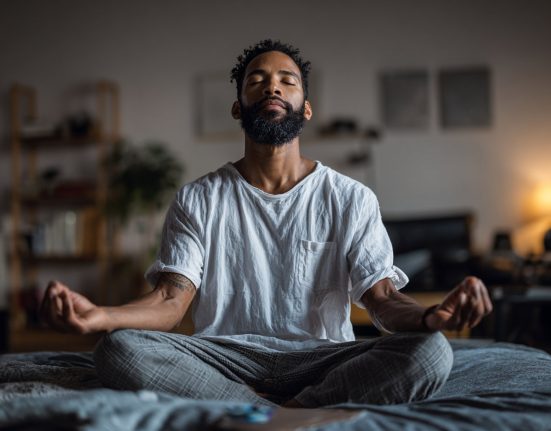
Mindfulness meditation is often sold with soft music and perfect lighting. In real life, it’s far more ordinary. It’s you, on a chair or the edge of your bed, noticing that your thoughts are doing somersaults and deciding not to argue with them for a moment. That tiny pause is where something important starts to shift.
On paper, the practice sounds almost too simple: pay attention to the present moment, with curiosity rather than judgment. Yet for an anxious mind, that’s like teaching a racehorse to walk.
Look at the numbers. Studies from universities like Harvard and Oxford keep finding the same thing: regular mindfulness practice can reduce reported anxiety and stress levels by noticeable margins, sometimes in as little as eight weeks. One famous study on an eight-week mindfulness-based stress reduction (MBSR) program showed measurable changes in brain areas linked to emotion regulation.
Beyond the brain scans, there are the small, human stories. An overworked nurse who starts sitting quietly for ten minutes before the night shift and realises she no longer carries her patients’ pain home quite as heavily. A freelancer who uses a five-minute breathing app before opening their inbox and notices their Monday panic dial down from a nine to a six.
These aren’t miracle cures. They’re micro-shifts. Yet stacked day after day, they begin to redraw the emotional map of a life.
From a logical standpoint, mindfulness meditation reduces anxiety because it breaks one crucial loop: the automatic fusion with every thought that passes through your mind. When you sit and notice, “Ah, there’s the ‘I’m going to mess this up’ story again,” you move from being inside the thought to watching it.
The nervous system reads that distance as safety. Heart rate slows. Muscles release a little. Over time, your brain learns that not every internal alarm needs a full-body emergency response. That leaves more mental space for something anxiety quietly steals: focus.
When you’re no longer dragged down every mental rabbit hole, attention can stay where you actually want it. On the email in front of you. The child telling you about their day. The book you’ve been meaning to finish for months.
How to actually meditate when your mind won’t shut up
The cleanest way to start isn’t with incense or a perfect cushion. It’s with a timer. Sit on a chair, feet on the floor, back supported but not slumped. Set a timer for five minutes. Close your eyes or lower your gaze. Bring attention to your breathing, wherever you feel it most clearly: nostrils, chest, or belly.
Then, wait for your mind to wander. Because it will. Two seconds in, you’ll remember a text you didn’t answer. A bizarre memory from school. Something someone said three years ago that still annoys you. The practice is not stopping any of this. It’s noticing, “I’m thinking,” and gently bringing your attention back to the breath.
That return, not the quiet, is the workout.
People often quit mindfulness because they think they’re bad at it. “My mind is too busy.” “I can’t stay focused.” “I get bored.” The truth is, every meditator on earth could say the same. The goal isn’t to create a blank mind. The goal is to change your relationship with the noisy one you already have.
One common mistake is going too hard, too fast. You read that serious practitioners sit for 30 or 45 minutes and you try to copy that on day one. By day three, you’re frustrated and secretly relieved to stop. Let’s be honest: nobody really does this every single day, exactly as planned.
Start smaller than you think you need. Three minutes. Five breaths. One pause before you unlock your phone. That way your brain doesn’t treat meditation like another impossible task.
“Mindfulness is not about feeling a certain way. It’s about feeling what you feel, with a bit more kindness and a bit less drama.”
Here’s a simple, boxed routine you can try for one week:
- Morning (3 minutes) – Sit on your bed. Notice 10 breaths. When thoughts come, label them “planning” or “remembering,” then return to the breath.
- Midday (2 minutes)
- Pause before lunch. Feel your feet on the floor, your hands touching each other or the table. Let sounds come and go without chasing them.
- Evening (5 minutes)
- Lie down or sit. Scan your body from head to toe, noticing areas that feel tight, heavy or numb. No need to fix anything. Just register what’s there.
It doesn’t look impressive from the outside. On the inside, you’re quietly teaching your attention to stay, and your anxiety to soften its constant grip.
Living with a mind that wanders less and worries softer
As the weeks pass, the benefits of mindfulness meditation show up less during the session and more in the messy bits of daily life. The tight chest before a difficult conversation may still appear, but now you notice it as a sensation, not a verdict. You can feel the trembling, breathe with it, and still say what you need to say.
Your focus begins to feel less like a fragile thing you’re always losing and more like a muscle you can call back. When your mind drifts during a meeting, you catch it sooner. When you’re reading and feel the urge to grab your phone, you sometimes choose to stay with the page. Not always. Enough to feel a difference.
There’s an emotional side effect, too. When you sit with your internal storms regularly, other people’s weather doesn’t throw you quite as much. A colleague’s stress, a friend’s short reply, your partner’s bad mood: you notice your old anxiety response kick up… and you have a fraction of a second more choice.
One plain truth runs through all of this: mindfulness doesn’t give you a new life. It gives you a clearer view of the one you already have. That clarity can be unsettling at first. You feel boredom, loneliness, restlessness more directly. Over time, they stop being enemies and become signals. Signals you can actually hear.
We’ve all been there, that moment when your brain feels too full and too scattered at the same time. Meditation doesn’t erase that completely. It offers a small, repeatable act of rebellion against it. Five minutes of saying: I will be here, with this breath, even while the world pulls at me.
Maybe the real question isn’t “Does mindfulness work?” but “What changes when I give my attention a home again?” That’s something no study can answer for you. Only the quiet, slightly awkward practice of sitting down and listening can.