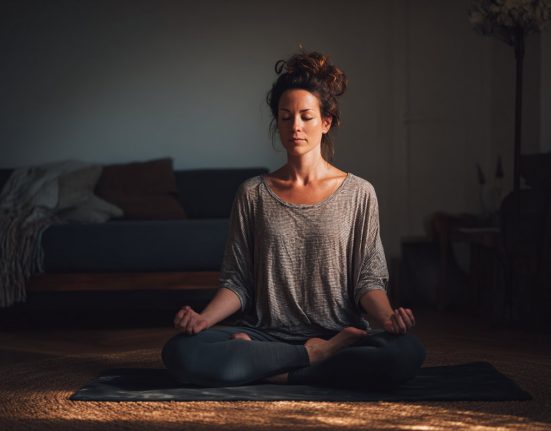


A calming space designed with intention can act as a gentle cue for your mind, helping you ease into meditation with better focus.
Meditation requires focus, and the space around you plays a big part; it can either support or distract. This is why carving out a dedicated spot for your daily practice is very important. In a world wired for noise and urgency, a calming corner in your home can become your personal grounding space. A well-designed and designated meditation space helps you to unwind and practice meditation more often.
Vivek Agarwal, Aman Bansal, and Abhishek Agrawal, Founders of Maanavi Homes, shared 4 tips on how to design a meditation corner that can become a quiet anchor in daily life:
1. Lean toward materials that don’t try too hard
- Brushed metal, woven cane, and raw wood offer a lived-in honesty.
- These are surfaces that invite touch and age with grace. They don’t demand weekly maintenance, but grow more comfortable with use.
2. Choose colours that soften
- A palette of soft browns, ecru, clay, and pale grey helps keep the eye steady.
- These tones are not dull, but non-intrusive. They allow the space to feel grounded and calm.
3. Let the space be part of the layout
- The most thoughtful meditation corners are not afterthoughts. They are integrated into the floor plan, built with the same care as the rest of the room.
- These spaces are designed to disappear into the home rather than stand apart from it.
4. Avoid over-styling
- It’s easy to complicate calm by adding too many layers or aiming for a styled, magazine-like moment.
- Spirituality doesn’t rely on styling; it stays when a space feels honest and unforced.
- A meditation area that asks nothing in return often becomes the one most visited. When a space doesn’t demand use or attention, there’s a natural desire to return.