
Starting yoga can feel both exciting and a little intimidating, especially if you’re new to exercise or not naturally flexible. But the truth is, yoga is not about touching your toes or holding poses perfectly. It’s about creating strength, balance, and awareness in both your body and mind.
By practicing consistently, even for short periods each day, you can improve posture, reduce stress, and enhance overall wellbeing. The key is to start with beginner-friendly poses that are safe, effective, and easy to follow. The following six yoga poses will give you a strong foundation, helping you build strength, flexibility, and confidence gradually.
Mountain Pose (Tadasana)
Mountain Pose may seem simple, but it’s the foundation for nearly every yoga posture. Stand with your feet hip-width apart and distribute your weight evenly across both feet. Engage your thigh muscles, lengthen your spine, relax your shoulders, and let your arms rest naturally by your sides. Keep your chin parallel to the floor and breathe steadily.
Why it matters: Mountain Pose teaches body awareness and alignment. By practicing this pose regularly, beginners learn how to stand tall, improve posture, and strengthen the legs and core. Proper alignment in Mountain Pose also reduces strain on your back, knees, and shoulders, making other yoga poses safer and more effective.
Pro tip: Imagine a string gently lifting the top of your head, encouraging length in your spine without forcing it. Focus on even breathing and noticing small adjustments in your body.
Downward-Facing Dog (Adho Mukha Svanasana)
Downward-Facing Dog is a full-body pose that strengthens, stretches, and energizes your body simultaneously. Start on all fours, tuck your toes under, and lift your hips up and back so your body forms an inverted “V.” Keep your hands pressing firmly into the mat, shoulders relaxed, and gaze toward your legs or navel.
Why it matters: This pose strengthens the arms, shoulders, and legs while stretching the spine, hamstrings, and calves. It also improves circulation and relieves tension in the back and neck.
Pro tip for beginners: If your hamstrings or back feel tight, bend your knees slightly and focus on lengthening your spine rather than forcing straight legs. Practicing Downward-Facing Dog daily can increase flexibility and boost energy levels.
Child’s Pose (Balasana)
Child’s Pose is a gentle, resting posture that allows the body to recover and reset. Kneel on your mat, bring your big toes together, and sit back on your heels. Fold forward, resting your forehead on the mat and extending your arms in front of you or alongside your body.
Why it matters: This pose is excellent for calming the nervous system, stretching the lower back, and releasing tension in the shoulders and hips. It also provides a safe space to pause during practice when you need a break.
Pro tip: Beginners can place a folded blanket or cushion under the forehead or hips for extra comfort. Focus on deep, steady breathing to fully relax into the pose.
Cat-Cow Pose (Marjaryasana–Bitilasana)
Cat-Cow is a gentle flow between two poses that warms up the spine and improves mobility. Begin on all fours with wrists under shoulders and knees under hips. Inhale as you arch your back, lifting the chest and tailbone (Cow), and exhale as you round your spine, tucking the chin and pelvis (Cat). Repeat slowly, matching your movement to your breath.
Why it matters: This flow enhances spinal flexibility, releases tension, and promotes better posture. It’s particularly useful for those who sit for long periods or experience stiffness in the back and neck.
Pro tip: Focus more on smooth breathing than on how far you arch or round your back. Over time, this pose increases awareness of spine alignment and body movement.
Warrior I (Virabhadrasana I)
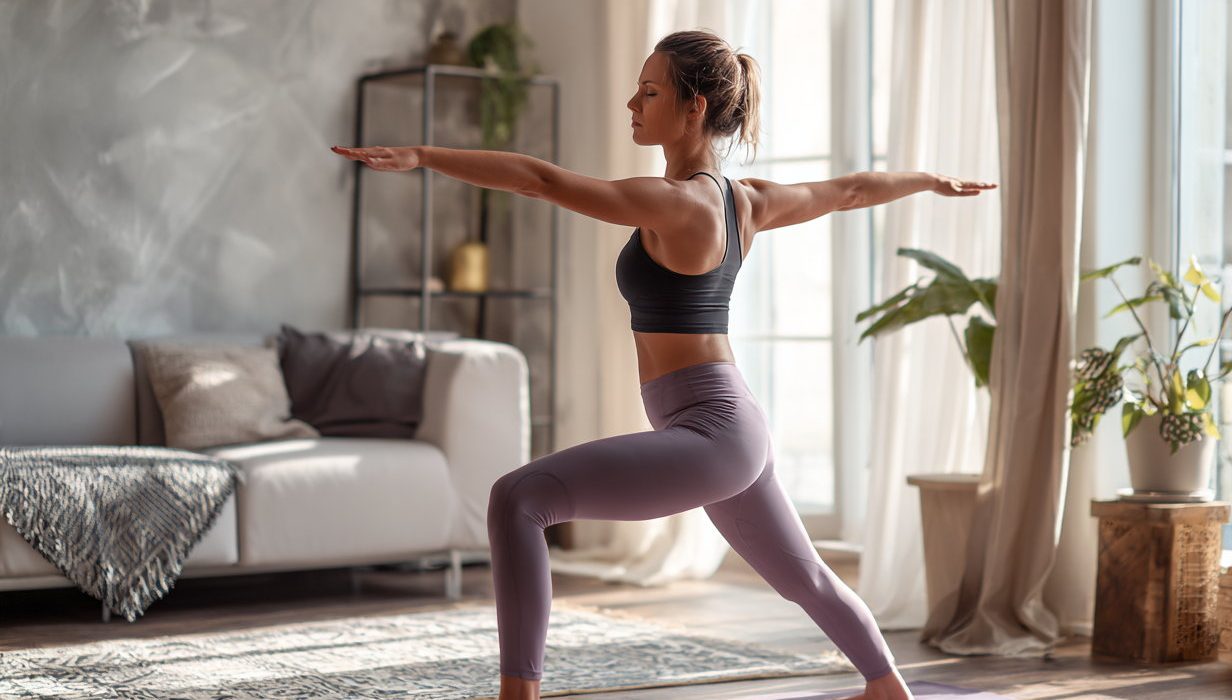
Warrior I is a powerful pose that builds strength, stability, and confidence. Step one foot back, bend the front knee, and straighten the back leg while keeping hips squared forward. Raise your arms overhead and gaze forward or slightly upward, maintaining steady breath.
Why it matters: Warrior I strengthens the legs, opens the hips, stretches the chest, and improves balance. Mentally, it encourages focus, determination, and confidence.
Pro tip for beginners: Shorten your stance if balance is challenging. Concentrate on aligning your hips and shoulders rather than forcing a deep bend in the front knee.
Tree Pose (Vrikshasana)
Tree Pose is excellent for improving balance, focus, and leg strength. Stand tall and shift your weight onto one foot. Place the sole of your other foot on your ankle, calf, or inner thigh (avoid the knee). Bring your hands together at your chest or raise them overhead, and keep your gaze fixed on a steady point.
Why it matters: Tree Pose strengthens the legs, improves coordination, and enhances concentration. It’s also a great pose for cultivating mental calm and patience, as balancing requires awareness and stillness.
Pro tip: Beginners may wobble initially, which is normal. Use a wall or chair for support if needed, and focus on maintaining steady breathing.
Final Thoughts
Yoga is a journey, not a competition. Starting with these six beginner-friendly poses ensures a safe, effective foundation for building strength, flexibility, and mental clarity. Consistency is more important than intensity, and even short daily sessions of 10–20 minutes can deliver noticeable benefits over time. Listen to your body, respect its limits, and enjoy the process of growing stronger with each breath and pose.