
Stress and anxiety are common experiences that affect many people in today’s fast-paced world. Whether it’s due to work, personal challenges, or overwhelming emotions, these feelings can take a physical and mental toll. Thankfully, yoga offers a natural, holistic way to reduce stress and anxiety. Through mindful movement, controlled breathing, and deep relaxation, yoga can help calm the mind and release the tension stored in the body. Here are four of the best yoga poses specifically designed to ease stress and anxiety, helping you find inner peace and balance.
1. Child’s Pose (Balasana)
Child’s Pose is a restorative, calming pose that encourages relaxation and helps to release built-up tension in the back, hips, and shoulders. It is one of the most effective poses for reducing stress and anxiety due to its grounding nature. When you move into this position, it signals to the body that it’s time to rest and restore, making it ideal for moments when you need to disconnect from overwhelming thoughts and emotions.
How to do it:
Begin by kneeling on the floor, with your big toes touching and knees spread apart. Lower your hips back onto your heels, and extend your arms out in front of you, resting your forehead on the floor. If it’s more comfortable, you can place your arms by your sides with your palms facing up. Close your eyes and take long, deep breaths, focusing on releasing tension with each exhale. Hold for 30 seconds to 1 minute.
Why it’s effective:
Child’s Pose helps activate the parasympathetic nervous system, encouraging the body to relax and reducing the effects of stress. It stretches the back, hips, and thighs, areas where tension is often stored. This posture promotes a sense of safety and comfort, allowing you to let go of mental distractions and reset both physically and emotionally.
2. Downward-Facing Dog (Adho Mukha Svanasana)
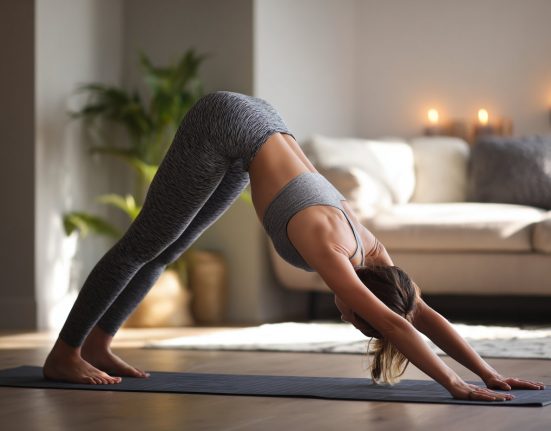
Downward-Facing Dog is a fundamental yoga pose that provides a full-body stretch while helping to relieve tension in the spine, shoulders, and legs. This pose encourages a sense of rejuvenation and balance, which is vital for relieving both physical and emotional stress. By focusing on the breath and lengthening the body in this pose, you can redirect your energy from stress into a calming stretch.
How to do it:
Start on your hands and knees in a tabletop position. Press your palms firmly into the floor and tuck your toes. Lift your hips toward the ceiling, creating an inverted “V” shape with your body. Keep your feet hip-width apart and your hands shoulder-width apart. Try to press your heels toward the floor and straighten your legs, but don’t force them if it feels uncomfortable. Hold for 20-30 seconds, focusing on deep, steady breaths.
Why it’s effective:
This pose stretches and strengthens multiple muscle groups, including the hamstrings, calves, spine, and shoulders. It also promotes blood circulation and relieves physical tension, which is often linked to anxiety. The focus on breath and body alignment helps to calm the mind, making it easier to release anxious thoughts and regain mental clarity.
3. Legs Up the Wall (Viparita Karani)
Legs Up the Wall is a restorative pose that offers deep relaxation and has a calming effect on the nervous system. It encourages relaxation by reversing the flow of blood and allowing the body to rest in a supported position. This pose is particularly helpful for easing tension in the legs and lower back, areas that often hold stress, while promoting a feeling of calm and stillness in the mind.
How to do it:
Sit with one side of your body against a wall, then slowly swing your legs up the wall as you lower your back onto the floor. Your legs should be extended straight against the wall, and your arms can rest by your sides with palms facing up. If necessary, place a cushion or blanket under your hips for added support. Close your eyes and focus on your breathing, taking slow, deep breaths. Stay in the pose for 5 to 10 minutes.
Why it’s effective:
Legs Up the Wall helps to calm the nervous system and promotes deep relaxation by relieving tension in the legs and lower back. The inversion of the legs encourages a soothing effect on the body, helping to reduce symptoms of anxiety and stress. The focus on deep breathing during the pose can help clear the mind and relieve mental fatigue.
4. Bridge Pose (Setu Bandhasana)
Bridge Pose is a great posture for strengthening the back and legs while offering a gentle stretch to the chest, neck, and spine. This pose opens the chest and hips, which helps release physical tension stored in these areas. The physical opening it provides can counteract the tightness that anxiety often creates in the body, and it also promotes a sense of empowerment and stability.
How to do it:
Lie flat on your back with your knees bent and feet flat on the floor, hip-width apart. Place your arms by your sides with palms facing down. Press your feet into the floor and engage your core and glutes as you lift your hips toward the ceiling, forming a bridge shape with your body. Keep your shoulders and feet grounded, and hold the pose for 20-30 seconds while breathing deeply. Lower your hips slowly back to the floor.
Why it’s effective:
Bridge Pose strengthens the lower back, glutes, and legs while opening the chest and heart. This pose is helpful for releasing tension in the back and improving posture, which can become compromised during periods of stress. It also encourages deeper, slower breathing, helping to regulate the nervous system and reduce anxiety. The pose provides a feeling of physical and emotional support, making it a perfect pose to combat stress and calm the mind.
Conclusion
Yoga provides powerful tools for reducing stress and anxiety, and these four poses—Child’s Pose, Downward-Facing Dog, Legs Up the Wall, and Bridge Pose—are particularly effective for fostering relaxation and mental clarity. By regularly practicing these poses, you can help calm your nervous system, relieve physical tension, and create a sense of inner peace.
Incorporating yoga into your daily routine is a simple yet powerful way to manage the effects of stress and anxiety. The physical benefits, combined with the mindful breathing and focus, allow you to reset both your mind and body, ultimately promoting better overall well-being. Whether you practice yoga in the morning to start your day with calmness or at night to unwind, these poses will help you feel more grounded and balanced.